Start with the actual problem
What do you need the garage to do?
To decide how to keep a garage cooler in summer without wasting energy, first identify whether you need to protect stored items, improve comfort, lower the actual air temperature, or control humidity. A fan, exhaust system, dehumidifier, and air conditioner solve different problems, so pick the path that matches how you use the space.
Quick answer: The most energy-efficient sequence is to measure the garage, block direct solar heat, seal obvious exterior gaps, and add compatible insulation where it will help. Use a fan only while someone is present. Ventilate with outdoor air only when that air is cooler and not excessively humid or smoky. If you need the garage to stay at a set temperature, improve the envelope before paying to air-condition it.
Do not treat a hot garage as a safe place to push through heat
Temperature and humidity together determine heat stress. Check the National Weather Service heat index, take breaks in a cooled area, and stop work if conditions are unsafe. A fan is a comfort tool, not protection from dangerous heat. Never idle a vehicle or operate a generator, grill, or other fuel-burning engine in a garage, even with the main door open.
Garage-cooling methods compared
The right method depends on the heat source, climate, and whether the garage is occupied. This table separates improvements that reduce heat gain from devices that only move or condition air.
| Method | What it changes | Best use | Important limit |
|---|---|---|---|
| Temperature/RH logger | Nothing directly; it identifies timing and conditions | Choosing the right fix and checking whether it worked | One sensor cannot show whether outdoor air would help; two locations are better. |
| Exterior shade or window shade | Reduces solar heat before it enters | West- or south-facing doors and windows | Do not attach material that interferes with door movement or violates window-film or door instructions. |
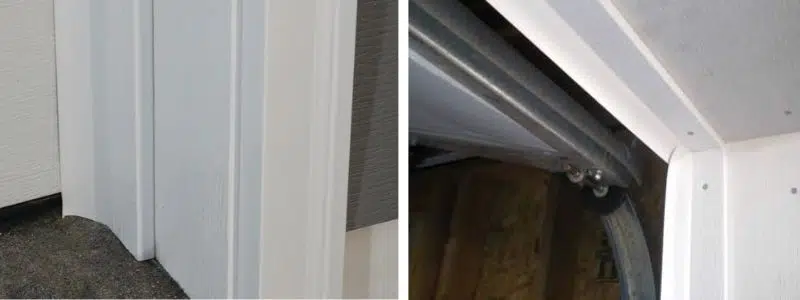
| Weatherstripping and air sealing | Reduces uncontrolled hot-air leakage | Visible daylight and worn top, side, or bottom seals | Do not block intentional combustion-air or code-required ventilation openings. |
| Garage-door or ceiling insulation | Slows heat transfer | Sun-exposed doors or hot ceilings with compatible construction | Added door weight can change balance. Confirm manufacturer permission before modifying a door. |
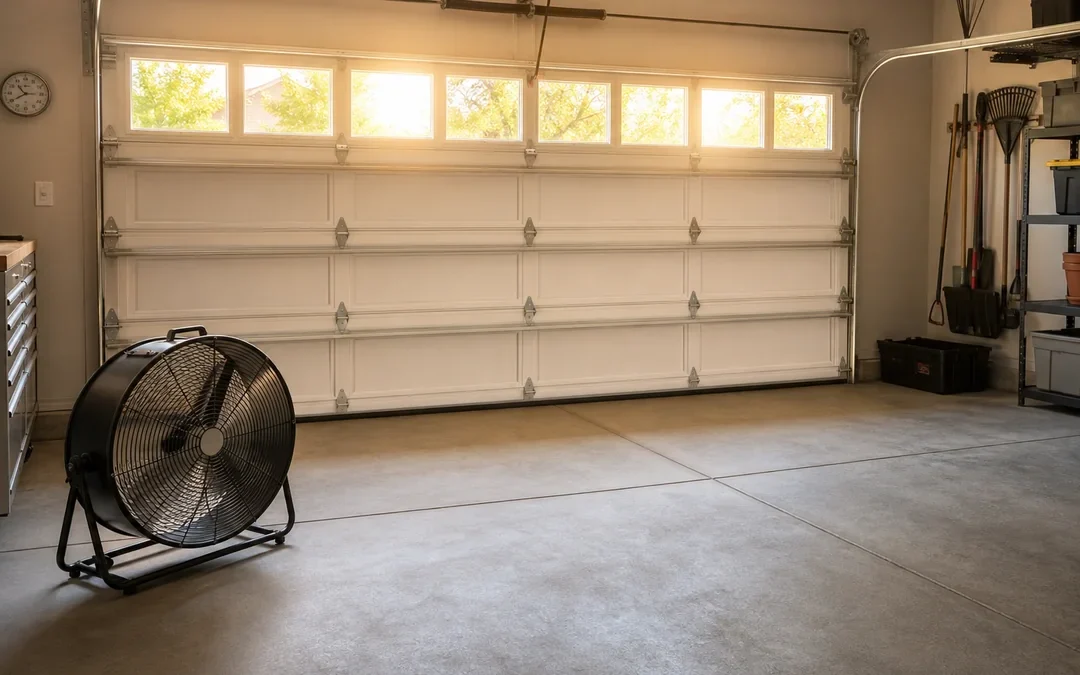
| Portable air circulator | Moves air across people | Short work sessions in tolerable temperatures | It does not remove heat from a closed garage; switch it off when nobody needs the airflow. |
| Outdoor exhaust ventilation | Replaces garage air with outdoor air | Cooler, cleaner outdoor air and a safe make-up-air path | It can make a hot-humid garage worse and can depressurize an attached garage if poorly designed. |
| Dehumidifier | Removes water vapor | Persistently high RH when outdoor ventilation is not suitable | It slightly warms the space and consumes energy. Fix moisture sources first. |
| Dedicated air conditioning | Lowers temperature and usually removes moisture | A sealed, insulated garage used as occupied workspace | Conditioning a leaky garage or leaving the door open wastes energy. Use equipment designed and installed for the space. |
Three useful products for three different jobs
These are not ranked as interchangeable cooling devices. Each one serves a different step: measurement, occupied comfort, or controlled outdoor ventilation. The exact manufacturer specifications and live Amazon listings were checked on July 17, 2026.
As an Amazon Associate I earn from qualifying purchases. Garage Results may earn a commission if you buy through these links, at no added cost to you.
SensorPush HT1 temperature and humidity logger

The HT1 records temperature and relative humidity at one-minute intervals and stores more than two weeks of readings on the sensor. The phone app graphs the history after a Bluetooth sync; remote access requires the separate G1 gateway.
Best for: Proving when the garage heats up and whether a change helps. Two sensors—one in the garage and one in outdoor shade—make ventilation decisions more useful.
Do not buy it if: You only want a large instant display or need built-in Wi-Fi without another device. The HT1 is not the water-resistant model in the SensorPush line.
Vornado 630 medium air circulator
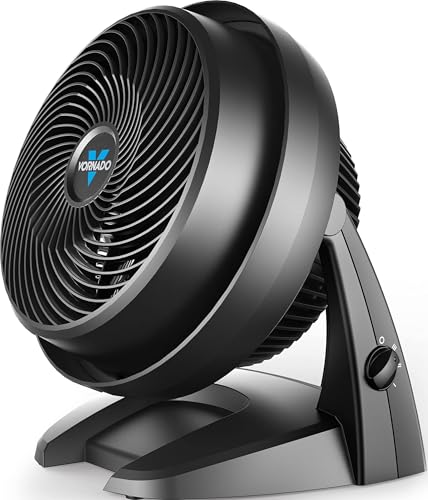
Vornado lists three speeds, directional airflow, and power use of 50, 38, or 34 watts. Aim it across the occupied work area instead of trying to cool every cubic foot of the garage.
Best for: Improving personal comfort during a short project when the heat index is still safe. Turn it off when you leave.
Do not buy it if: You need unattended temperature control, outdoor-rated equipment, or actual heat removal. Vornado specifies indoor use.
AC Infinity AIRLIFT T10 exhaust fan

The manufacturer specifies 631 CFM free-air airflow, 54 watts, a 10.78-inch-square mounting opening, and temperature/humidity controls. It is specifically marketed for garages, workshops, sheds, attics, and greenhouses.
Best for: A professionally planned exterior-wall exhaust setup that runs only when outdoor conditions help and adequate make-up air is available.
Do not buy it if: Outdoor air is usually hotter, wetter, smoky, or dusty; you cannot cut a safe exterior opening; or you have not addressed pressure and air-sealing concerns in an attached garage.
Measure before buying cooling equipment
A one-time afternoon reading can be misleading. A logger shows whether heat arrives with direct sun, builds under the roof, follows outdoor temperature, or remains trapped after sunset.
Photograph each sensor location and record the dates, outdoor weather, door orientation, garage dimensions, and whether the main door opened during the test. That turns a product recommendation into a repeatable home experiment rather than a guess.
Choose the strategy that fits your climate
Hot days with cool, dry nights
Block daytime solar gain, keep the garage closed during the hottest hours, then use cross-ventilation or an exhaust fan after outdoor temperature drops below the garage temperature. Temperature and humidity controls can prevent the fan from running at the wrong time.
Hot and humid most of the day
More outdoor air may raise the garage’s moisture load even when it feels breezy. Prioritize shade, air sealing, and insulation. For regular occupancy, a properly sized dedicated cooling system may be more predictable than continuous exhaust.
Hot and dry
Night flushing can work well when nights cool down. Evaporative cooling can reduce air temperature in dry climates, but it adds moisture and requires maintenance and ventilation. It is a poor choice where humidity is already high.
Smoke, dust, or poor outdoor air
Do not automatically draw polluted outdoor air into the garage. Keep openings closed during poor-air events and follow local air-quality guidance. A filter can reduce some particles, but filtration does not make every outdoor-air condition safe.
Fix summer garage heat in this order
- Block direct sun before it entersUse exterior shade where practical. For garage-door windows, choose shades or film only after checking the glass and door manufacturer’s instructions; some insulated or coated glass can be damaged by incompatible film.
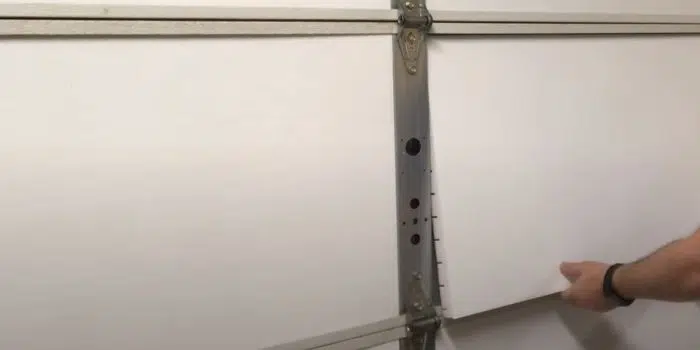
- Seal exterior gaps without blocking required ventilationReplace worn perimeter seals and correct visible daylight around the door. Use our garage-door gap guide to identify the top, side, and bottom problem before buying material.
- Reduce heat transfer through the door and ceilingA sun-baked uninsulated steel door can radiate heat into the garage. Confirm that the door maker permits a retrofit and follow our garage-door insulation guide. Added weight can change door balance.
- Move air only when it helpsFor personal comfort, aim a portable fan across the work zone and switch it off afterward. For heat removal, exhaust only to the outdoors and only when outdoor conditions are favorable.
- Condition only the space you have improvedIf the garage is used as a workshop for long periods, discuss dedicated equipment with a qualified HVAC professional. Do not add a casual supply or return connection to the home’s system; attached garages can contain vehicle exhaust, gasoline vapors, solvents, and other pollutants.
How to think about exhaust-fan size
Airflow ratings describe the fan under specified conditions; they do not guarantee the installed airflow in your wall. Louvers, screens, ducting, wind, and inadequate make-up air reduce real performance. Use the calculation below only to compare a fan’s nominal airflow with your garage volume—not as a universal sizing rule.
Two useful calculations
Garage volume = length × width × average ceiling height
Theoretical minutes per air change = garage volume ÷ fan CFM
Example only
A 20-by-20-foot garage with a 9-foot ceiling contains about 3,600 cubic feet. At a nominal 631 CFM, one theoretical air change takes about 5.7 minutes. Actual installed airflow will be lower and the garage needs a safe path for replacement air.
Before cutting a wall, confirm structure, electrical requirements, weatherproofing, local permits, exhaust location, noise, make-up air, and the garage-to-house pressure relationship. Exhaust outdoors—never into an attic, crawlspace, or living area.
Who should not buy more garage-cooling equipment yet?
You have not measured the problem
If the garage is only hot for two sunny hours, shade or door insulation may outperform a fan that runs all day. Log the pattern first.
The garage door and seals are failing
Repair door operation, damaged panels, missing seals, water entry, or balance problems before adding weight or paying to cool leaking air.
You expect a fan to lower stored-item temperatures
A recirculating fan does not remove heat from a closed room. It is worthwhile when its airflow crosses a person or supports a deliberate ventilation path.
You plan to leave the main door open while air-conditioning
Mechanical cooling cannot be efficient when the largest opening remains open. Improve security, air sealing, and the envelope before buying cooling capacity.
Your outdoor air is hotter or wetter
An exhaust fan cannot cool below the incoming air condition. In humid climates it can also increase condensation or corrosion risk when that air reaches cooler surfaces.
The garage contains a safety problem
Cooling equipment is not a substitute for safe fuel storage, proper combustion-appliance venting, carbon-monoxide protection, or professional electrical work.
Garage cooling FAQ
Will a fan actually cool a garage?
A portable fan usually cools people by increasing air movement and evaporation; it does not remove heat from a closed garage. An exhaust fan can lower the garage temperature toward the outdoor temperature when the incoming outdoor air is cooler and a make-up-air path exists.
Should I leave the garage door open at night?
Only if outdoor air is cooler and suitable, security is acceptable, and rain, pests, smoke, and humidity are not concerns. A controlled exhaust path may be more practical than leaving the largest door open. Close the garage again before the outdoor air becomes hotter.
Does garage-door insulation help in summer?
It can slow heat transfer through a sun-exposed or hot door, but results depend on the door, material, installation, and other heat sources. Confirm manufacturer permission, use an honestly rated assembly, keep insulation away from moving parts, and recheck door balance after installation.
Is a dehumidifier a good way to cool a garage?
No. A dehumidifier can make muggy air feel less oppressive and protect moisture-sensitive storage, but ENERGY STAR notes that it slightly warms the surrounding space. Use it for measured humidity, not as a substitute for cooling.
Can I extend a house HVAC vent into an attached garage?
Do not make that change casually. Attached garages can contain carbon monoxide, benzene, fuel vapors, and other pollutants. EPA renovation guidance specifically calls for examining HVAC components and air leaks between attached garages and occupied spaces. Ask a qualified HVAC professional and local code authority about a dedicated, properly separated system.
Is an evaporative cooler useful in a garage?
Sometimes, in a hot, dry climate with enough ventilation. It adds moisture as it cools, so performance falls as humidity rises and it can worsen an already muggy garage. Check the manufacturer’s climate guidance and provide the required water, cleaning, and airflow.
Where should a garage exhaust fan go?
Hot air accumulates high, so high exterior-wall exhaust with a lower make-up-air path is a common arrangement. The final location must also account for framing, wiring, weather, doors and windows, property lines, combustion appliances, and pressure across the attached garage-to-house boundary. Use a qualified installer where those conditions are uncertain.
How we researched this guide
Garage Results has not claimed hands-on testing of the products in this article. The recommendations come from the decision each product supports, current manufacturer specifications, exact retailer-listing checks, and federal energy, ventilation, indoor-air, and heat-safety guidance.
- U.S. Department of Energy: home cooling, shading, insulation, ventilation, and hot-humid limits
- DOE Building Science Education: night flushing and sensor-controlled natural ventilation
- DOE Energy Saver: summer cooling and fan-use guidance
- ENERGY STAR: dehumidifier sizing, efficiency, RH, and heat added to the space
- U.S. EPA: attached-garage pollutants, HVAC components, and garage-to-house air leaks
- National Weather Service: heat index from temperature and relative humidity
- U.S. CPSC: never operate a generator in a garage
- SensorPush HT1 specifications
- Vornado 630 specifications and use information
- AC Infinity AIRLIFT T10 specifications and installation dimensions