Plan your garage downtime
When can you use your garage floor again?
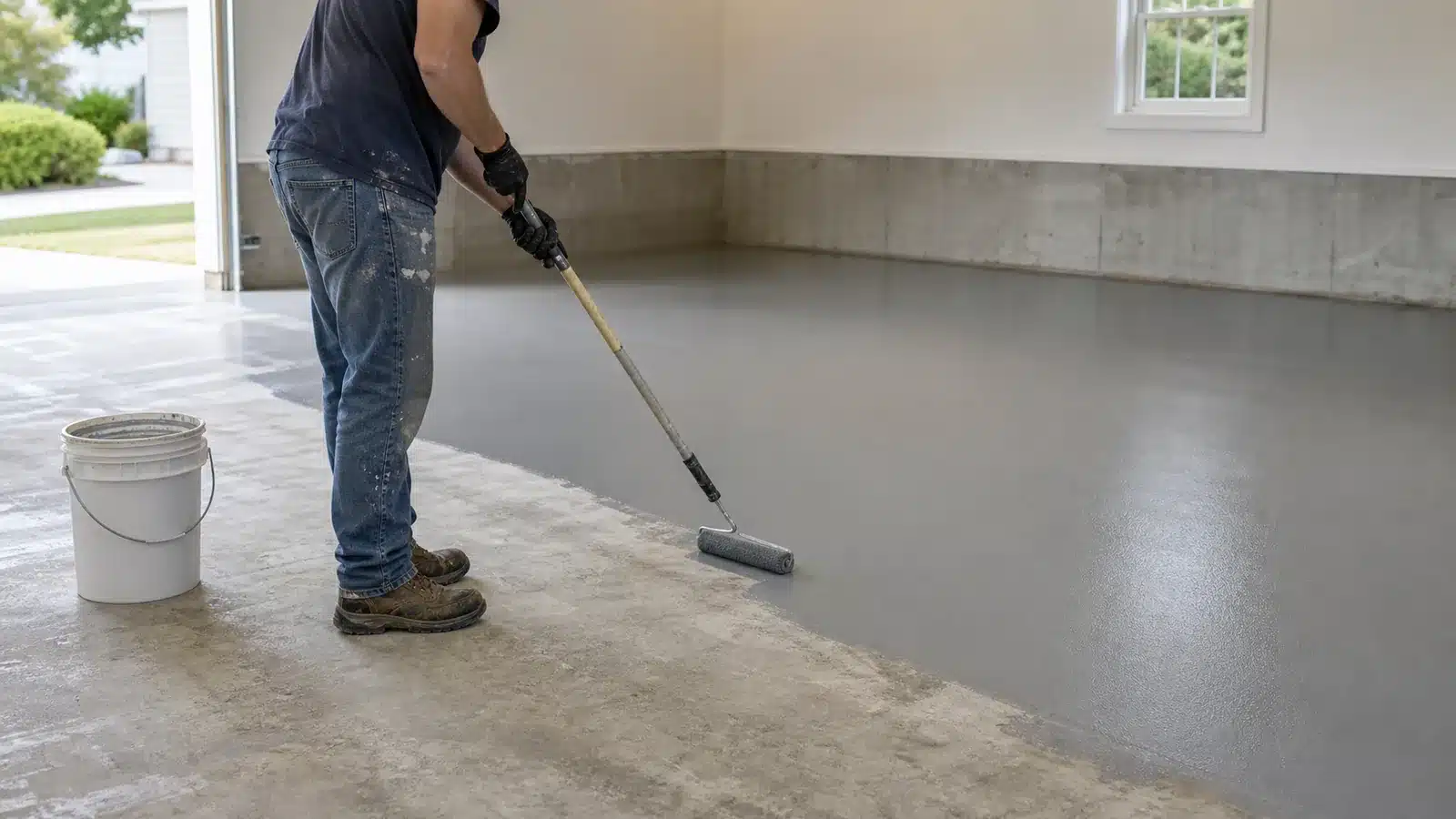
A floor that looks dry may still need more time before another coat, shoes or car tires. Match your next step to the instructions for the coating you used.
Quick answer: Garage floor epoxy dry time depends on the exact coating and the use you have in mind. The examples below allow foot traffic in about 8–24 hours and vehicle traffic in 24 hours to 7 days under their stated conditions. Recoating, heavy loads, cleaning and full cure have separate limits. Follow every layer’s instructions, including a clear topcoat, before returning the garage to use.
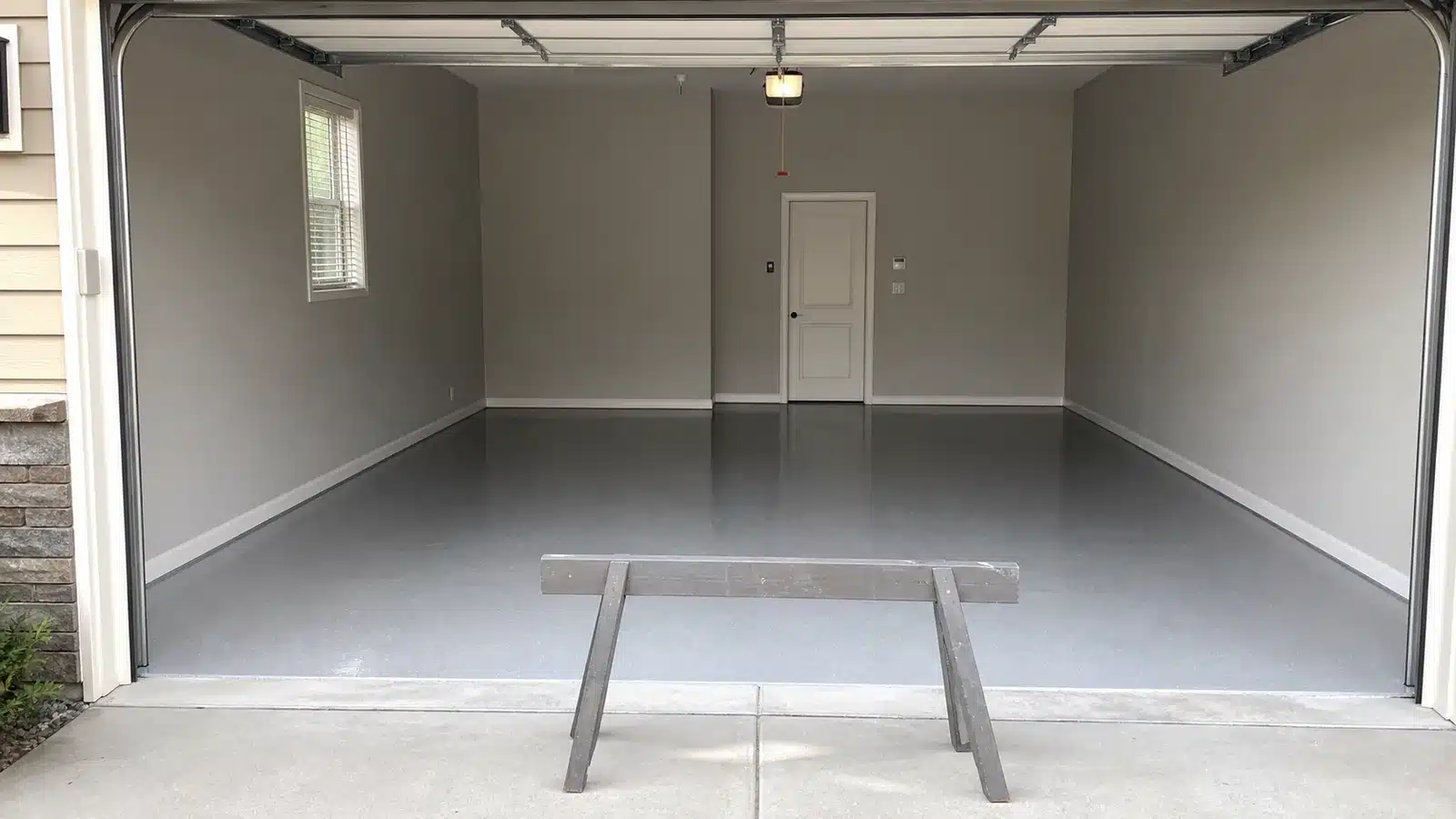
The useful question is not simply “Is the floor dry?” It is “What is the next load or exposure, and has this exact coating reached the milestone required for it?” A surface can stop feeling tacky while the film is still gaining hardness and chemical resistance.
Dry, hard, traffic-ready and fully cured are different
Pot life
The application clock. Once a two-part coating is mixed, it remains workable only for the stated time and conditions. Pot life is not floor dry time.
Tack-free or dry to touch
The surface clock. The film no longer feels sticky under the manufacturer’s test. That does not automatically permit walking or recoating.
Recoat window
The bonding clock. A second coat or topcoat may have a minimum wait, a maximum wait or both.
Traffic ready
The use clock. Light foot, heavy foot and vehicle traffic can have different times.
Full cure
The final performance clock. The coating continues developing properties after it first permits traffic.
Marketing names also do not create a common schedule. A two-part water-based epoxy, a urethane-modified high-solids coating and a product sold as “1-Part Epoxy” can publish very different milestones. Read the exact label and technical data rather than scheduling by the word epoxy alone.
Garage-floor coating timing examples
These manufacturer examples show why the permitted use and application conditions matter more than a single generic cure-time estimate.
| Named system | Recoat | Foot traffic | Vehicle or tire use | Full cure or later limit |
|---|---|---|---|---|
| Rust-Oleum EPOXYSHIELD water-based garage-floor pouch kits ESH-39 technical data (PDF) |
Use the instructions for the compatible next coat; this sheet does not list a general recoat window | 24 hours | 72 hours | 3 days in the sheet’s Dry Time section, at 70°F and 50% relative humidity |
| Rust-Oleum RockSolid Garage Floor Coating Kit RSD-10 technical data (PDF) |
Follow the exact base/topcoat instructions | 8–10 hours, only when no longer tacky | 24–36 hours, depending on temperature and humidity | No separate full-cure milestone stated; dry-hard is not a substitute |
| BEHR Premium Concrete & Garage Self-Priming 1-Part Epoxy Coating BEHR product instructions |
At least 4–6 hours before a needed second coat | Light foot traffic after 24 hours; heavy foot traffic or furniture after 72 hours | 7 days before automotive tires | 30 days before rinsing or cleaning |
Conditions matter: the EPOXYSHIELD physical-properties table uses 70–80°F and 50% relative humidity; its Dry Time paragraph uses 70°F and 50%. RockSolid also uses 70–80°F and 50% as reference conditions. Cooler conditions can mean a longer wait, and BEHR specifically warns that high humidity extends drying.
Match the package, not just the brand. The EPOXYSHIELD example is the two-part pouch-kit family covered by ESH-39, including gray 251965 and 251870. Its 251870 label (PDF) also says walk-on at 24 hours and drive-on at 3 days. Other EPOXYSHIELD formulas can differ. If your label and data sheet disagree, ask Rust-Oleum to confirm the schedule for your kit instead of choosing the shorter wait.
Build a realistic garage-floor project calendar
Start the calendar before opening a can or combining components. Work backward from the first day the garage must carry a vehicle, not from the day you hope to finish rolling.
List the layers and prep work
Record the primer, patch, base coat and topcoat, then allow separate time for cleaning, crack repair, profiling and moisture decisions. The final layer can restart the traffic clock.
Write down both ends of every recoat window
“Recoat after 24 hours” is incomplete when the same instructions also say “within 72 hours.”
Separate the use milestones
Mark light and heavy foot traffic, furniture, automotive tires, full cure, washing and chemical exposure separately when the instructions do.
Add margin and keep a record
Allow for a cool slab, humidity and delayed work. Save product names, lot codes, start and finish times, measured conditions and written manufacturer answers.
Still choosing a coating?
These are two of the coating systems in the timing table. Choose for your concrete, floor area and available downtime. Measure the floor and check the package coverage; a “1-car” or “2.5-car” label is only a size guide.
Affiliate disclosure: As an Amazon Associate I earn from qualifying purchases. This does not increase the price you pay.
Rust-Oleum EPOXYSHIELD
Gloss gray · 1-car kit · Model 251965
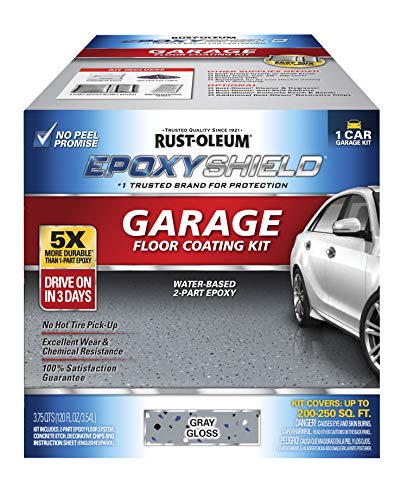
A two-part, water-based epoxy option for an indoor concrete garage floor. Plan for the 72-hour vehicle wait in the ESH-39 instructions above, with the required temperature and humidity conditions.
View on Amazon →Rust-Oleum RockSolid
Gray · 2.5-car kit · Model 293513
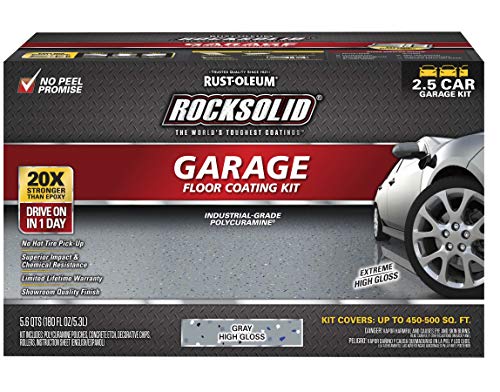
A polycuramine option to consider when a shorter garage closure matters. Its RSD-10 instructions allow vehicle traffic in 24–36 hours, depending on temperature and humidity; any added topcoat has its own waiting period.
View on Amazon →Already applied your coating? Keep following that product’s instructions. Buying a different coating or adding another layer will not shorten the cure time of the floor underneath.
Recoat time is a window, not a finish line
A minimum recoat time keeps a new layer from disturbing or trapping an undercoat that is not ready. A maximum recoat time protects the bond between layers. Within the approved window, compatible layers may form the bond the system was designed to use. After the window closes, the next layer may need a different cleaning and abrasion procedure to create mechanical adhesion.
The EPOXYSHIELD Premium Clear Top Coating page says to apply over a coated surface after 24 hours. For a different system, the RockSolid Textured Clear Topcoat sheet (PDF) specifies no earlier than 8–10 hours after RockSolid Floor Coating, when dry enough for foot traffic, and within 7 days. These instructions apply to the named combinations, not every clear coat.
- Do not recoat because the surface merely looks dry. Meet the minimum time and every stated surface condition.
- Look for a maximum window, too. If it has passed, get the maker’s cleaning and abrasion procedure.
- Keep the system compatible. One maker’s base-coat window does not automatically approve an unrelated clear coat.
When can you walk on a newly coated garage floor?
Wait until the exact system permits foot traffic and any stated condition—such as no remaining tack—is met. The first permitted foot traffic should be clean, light and necessary. It does not mean the floor is ready for work boots carrying grit, a rolling tool chest, a ladder with small feet or furniture dragged into position.
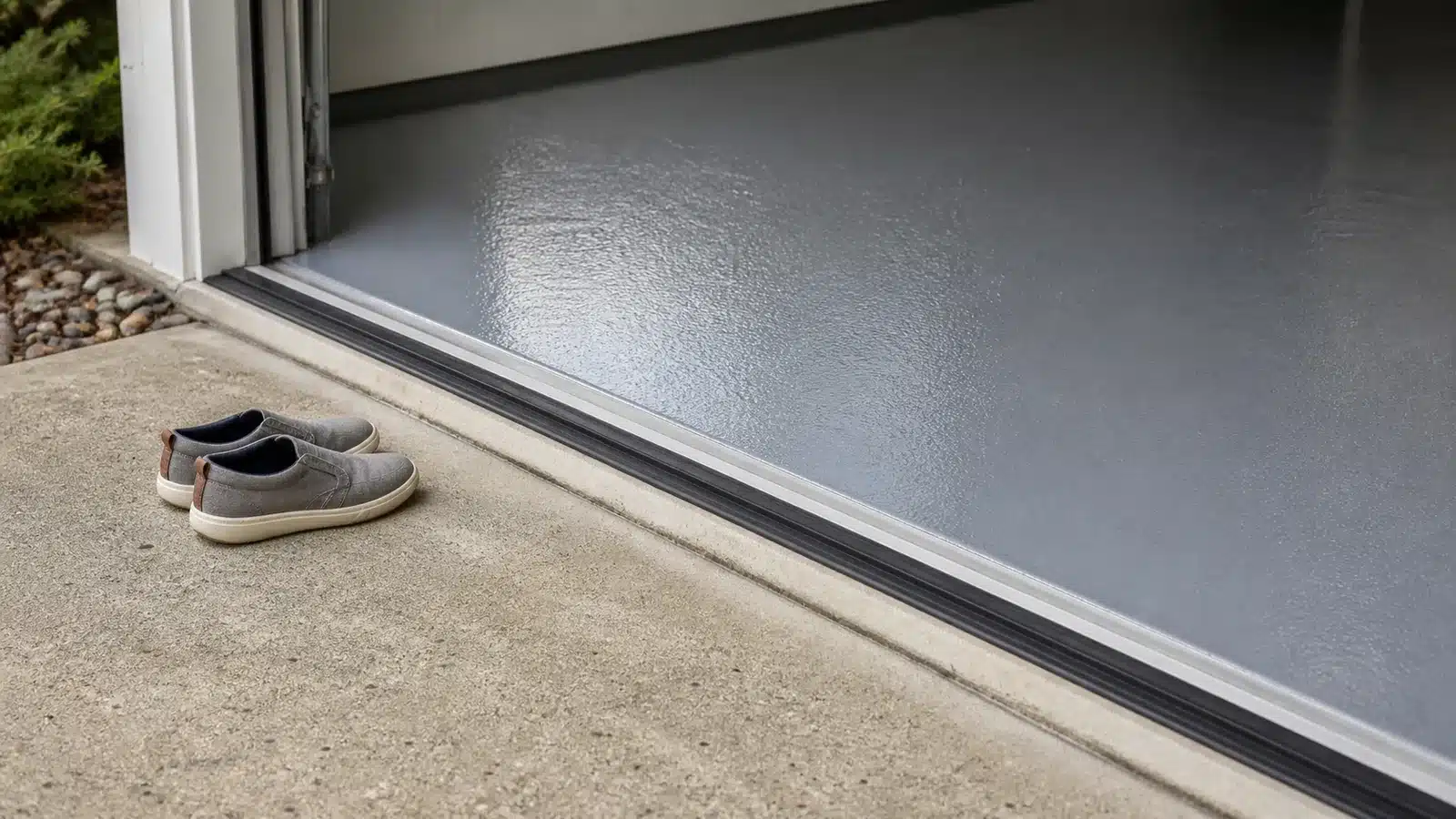
For any topcoat or decorative step that requires access to the floor, use the footwear and sequence specified by that system. Do not treat an installer’s access method as permission for ordinary foot traffic.
When can you park a car on garage-floor epoxy?
Use the automotive-tire or vehicle-traffic time, not the foot-traffic time. Tires concentrate vehicle weight into small contact patches. They also arrive warm, carry grit and turn across the coating as the driver steers. A coating that supports careful walking may still mark, lift or deform under tires.
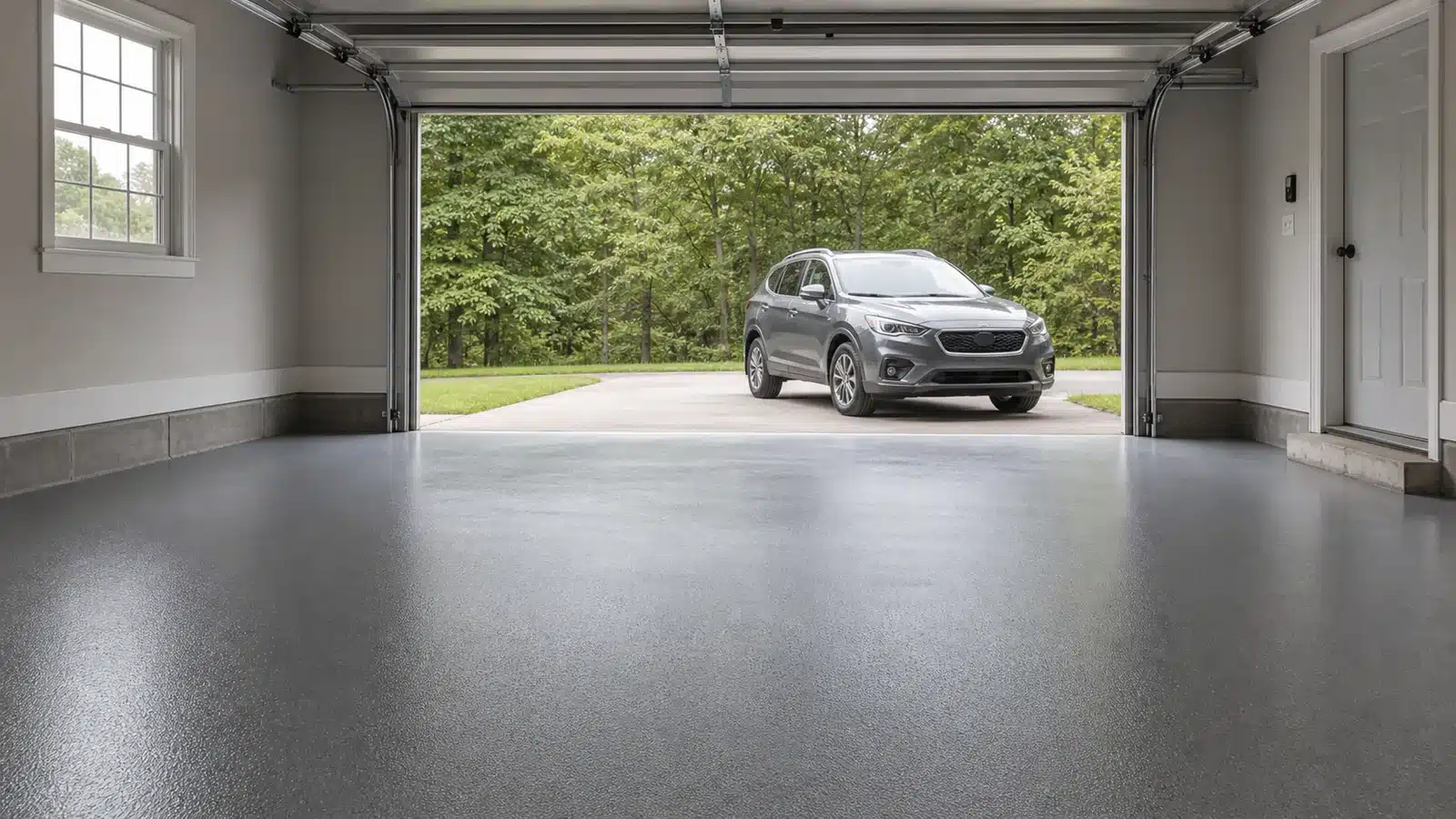
The comparison above is a useful planning guide, but it is not permission to substitute one product’s schedule for another. Count the waiting period from the relevant coat’s application, not from the start of surface preparation. If you add a clear coat, check its return-to-service instructions before moving the car inside.
When a manufacturer gives permission at a range such as 24–36 hours, choose the condition-appropriate end rather than automatically selecting the shortest. A cooler slab or higher humidity can justify more time, while use outside the permitted environmental range needs manufacturer guidance—not an invented multiplier.
What about cabinets, jacks, mats, water and chemicals?
| Load or exposure | Why it is different | Scheduling approach |
|---|---|---|
| Cabinets and shelving | Small feet create point loads; sliding can scratch or wrinkle an immature film. | Use the heavy-foot/furniture or full-cure instruction. Lift into place and use compatible load-spreading feet when appropriate. |
| Floor jack, jack stands and motorcycle kickstand | Very high load is concentrated into a small area and may dent even a traffic-ready coating. | Wait for the maker’s heavy-load or full-cure guidance and use a suitable load-spreading plate if the coating maker permits it. |
| Rubber mats and stored tires | They can trap moisture, transfer material or interact with an incompletely cured finish. | Confirm full-cure and mat/tire compatibility. Do not cover the floor merely because walking is allowed. |
| Water and cleaning | A coating may permit traffic before it reaches its stated wash or chemical-resistance milestone. | Follow the exact rinse, cleaning and chemical-exposure period. BEHR’s one-part guidance, for example, says 30 days before rinsing or cleaning. |
| Fuel, oil, salt and solvents | Chemical resistance develops according to the system and exposure. | Wait for the named chemical/full-cure guidance and clean spills using the manufacturer’s maintenance instructions. |
Do not put cardboard, plastic, plywood or a mat over the curing surface unless the coating maker approves that exact timing and material. A cover can stick, print a texture, trap moisture or slow ventilation. BEHR’s instructions make a narrow exception for corrugated cardboard under automotive tires after 72 hours when necessary. That exception does not apply to other coatings.
What changes garage-floor epoxy cure time?
- Slab temperatureConcrete can remain colder than the afternoon air. Measure the substrate when the instructions require it.
- Air temperatureCold can slow reaction and drying; heat can shorten pot life and working time. Stay within the product’s allowed range.
- Relative humidityHigher humidity can extend waterborne-coating dry time and affect some reactive systems. Use the exact limit.
- Dew pointA surface near or below dew point can collect condensation even when it looks dry. Follow the required slab-to-dew-point margin.
- Film thickness and coverageThick spots, puddles and applying below the published spread rate can cure differently from a uniform film.
- Mixing and inductionWrong ratio, incomplete mixing, skipped induction or material left too long in the container can create soft or uneven areas.
- VentilationFollow the product’s ventilation and safety requirements. Avoid a fan that blows dust, insects or cold damp air across the film.
- Layer countPrimer, base coat, color coat and clear coat each add a new window. The final layer usually controls return-to-service timing.
More heat is not automatically better. Unapproved space heaters can create fire, combustion-gas, condensation and temperature-gradient hazards. Direct heat can also make one area behave differently from the rest of the floor. Maintain only the conditions permitted by the manufacturer, with safe equipment and ventilation.
Why is the coating still tacky or soft?
A tacky floor after the published time is a symptom, not a diagnosis. Possible contributors include cool conditions, high humidity for the specific system, condensation, incorrect mix ratio, incomplete mixing, expired pot life, contamination, an incompatible undercoat, excessive film thickness or a component that was never combined correctly.
First keep people, animals and objects away. Photograph the condition, package labels, lot codes and mixing containers. Record where the problem appears and whether it changes near doors, walls or thick spots. Contact the exact coating maker with the product, substrate, preparation, batch, mix method, start/finish times, measured temperatures and humidity, and every layer below it.
Keep a simple project record
Product record
Exact names, colors, lot codes, data-sheet revisions and receipts for primer, patch, base and topcoat.
Condition record
Air and slab temperature, relative humidity, dew point when required, ventilation and weather during each coat.
Timing record
Mix start, induction, application start/finish, recoat start/finish, first foot traffic, first vehicle and first cleaning.
A written log prevents “about two days” from replacing the actual timing and conditions. It also makes manufacturer support more productive if gloss, hardness or adhesion differs across the floor.
If you have not yet selected a finish, compare the pros and cons of sealing or coating a garage floor. The right finish decision includes installation downtime, moisture tolerance, surface preparation and how the garage must be used—not appearance alone.
Frequently asked questions
How long does garage-floor epoxy take to dry?
Read the instructions for the use you need: another coat, walking, parking or cleaning. A surface that feels dry may not yet meet the traffic or full-cure requirement. The table above gives named examples with their conditions.
What happens if I recoat epoxy too soon?
The new layer can disturb, trap or interfere with an undercoat that has not reached its minimum recoat condition. Stop if the first coat remains tacky and obtain guidance for the exact products rather than hiding it under more material.
What happens if I miss the epoxy recoat window?
The system may require cleaning and mechanical abrasion before recoating. The method depends on the products and how far outside the window you are. Get the procedure from the manufacturer; do not assume one sanding grit applies to every coating.
Does garage-floor epoxy cure faster in hot weather?
Higher temperature can accelerate reaction and shorten working time, but it does not grant permission to apply above the product’s limit. Extreme heat, a hot slab or direct sun can create application defects. Stay within the exact temperature range.
Can a fan speed up epoxy cure time?
Use ventilation only as the instructions permit. Air movement may help some waterborne coatings, but a fan can also introduce dust, insects or damp/cold air. It cannot correct an incorrect mix, contamination or application outside the allowed conditions.
When is epoxy fully cured?
Use the full-cure time for your exact coating. It may match the vehicle-traffic time or come later. If the instructions give only traffic times, ask the manufacturer about your planned load or chemical exposure instead of assuming the floor has reached its final properties.
Primary sources
- Rust-Oleum EPOXYSHIELD water-based garage-floor pouch kits: ESH-39 technical data
- Rust-Oleum EPOXYSHIELD Garage Floor Coating product page
- Rust-Oleum RockSolid Garage Floor Coating Kit technical data
- Rust-Oleum RockSolid Polycuramine Garage Floor Coating Kit product page
- Rust-Oleum EPOXYSHIELD Premium Clear Top Coating product page
- Rust-Oleum RockSolid Textured Clear Topcoat technical data
- BEHR Premium Concrete & Garage Self-Priming 1-Part Epoxy Coating product guidance
- BEHR application instructions for its 1-Part Epoxy Concrete & Garage Floor Paint
Manufacturer pages, formulas and technical data can change. Reconfirm the label and instructions for every exact layer before scheduling the project.
For more floor, wall and storage projects, browse Storage, Floors & Walls.