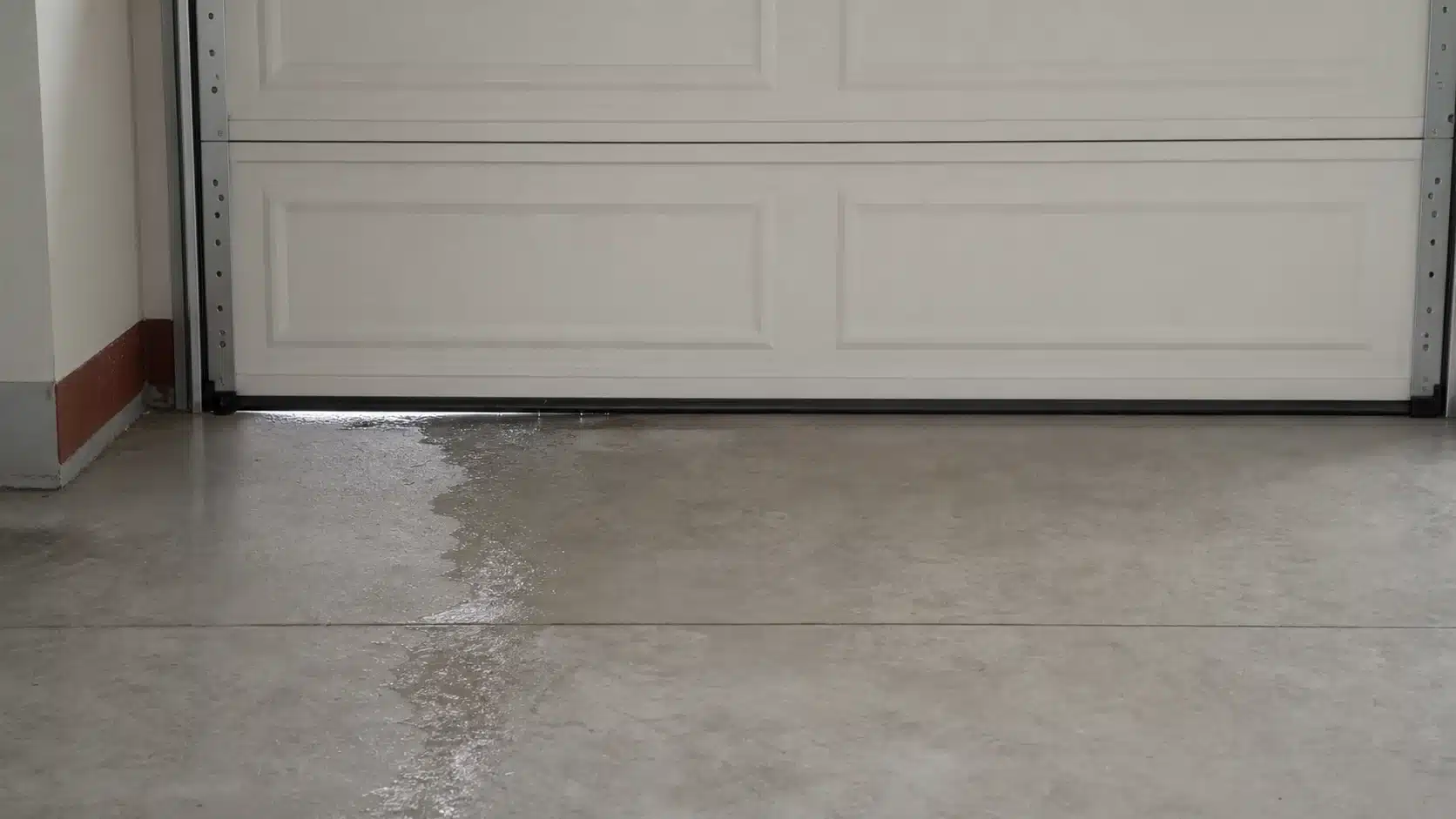
Water coming under garage door?
Start with where the wet trail begins
Do not buy a seal until you know whether the door has a gap or the property is sending more water toward the opening than a weatherseal can manage.
Quick answer: Water coming under a garage door usually points to one of three conditions: the moving door no longer seals against the floor, the door or slab leaves an uneven gap, or rainwater is being directed toward the opening faster than it can drain away. A replacement bottom seal can close a matched gap, while a threshold may help with minor unevenness. DASMA says sectional garage doors are not leakproof or watertight, so ponding, inward slope, failed drains, repeated flooding, and a crooked door need the repair that matches the actual cause.
Deal with active water safely
Stay out of standing water that may contact receptacles, extension cords, tools, vehicles, the opener, or other electrical equipment. Ready.gov advises against touching wet electrical equipment or standing in water around it. Turn off power only from a dry, safely accessible location. For active flooding, fast-moving water, sewage, a damaged electrical system, or water reaching the house, prioritize people and professional help over testing the door.
Do not loosen springs, lift cables, bottom brackets, spring anchors, or other high-tension hardware. DASMA identifies bottom brackets and connected spring hardware as high-tension components that should be adjusted only by a trained technician. If the door is crooked, heavy, off-track, damaged, or will not stay in position when manually operated according to its instructions, call a garage-door professional.
Observe the next light rain before changing anything
The goal is to identify the first entry point, not merely the place where the puddle eventually collects. Water can travel along a groove, control joint, wall edge, floor coating, or low area and make the garage door look responsible even when the leak began elsewhere.
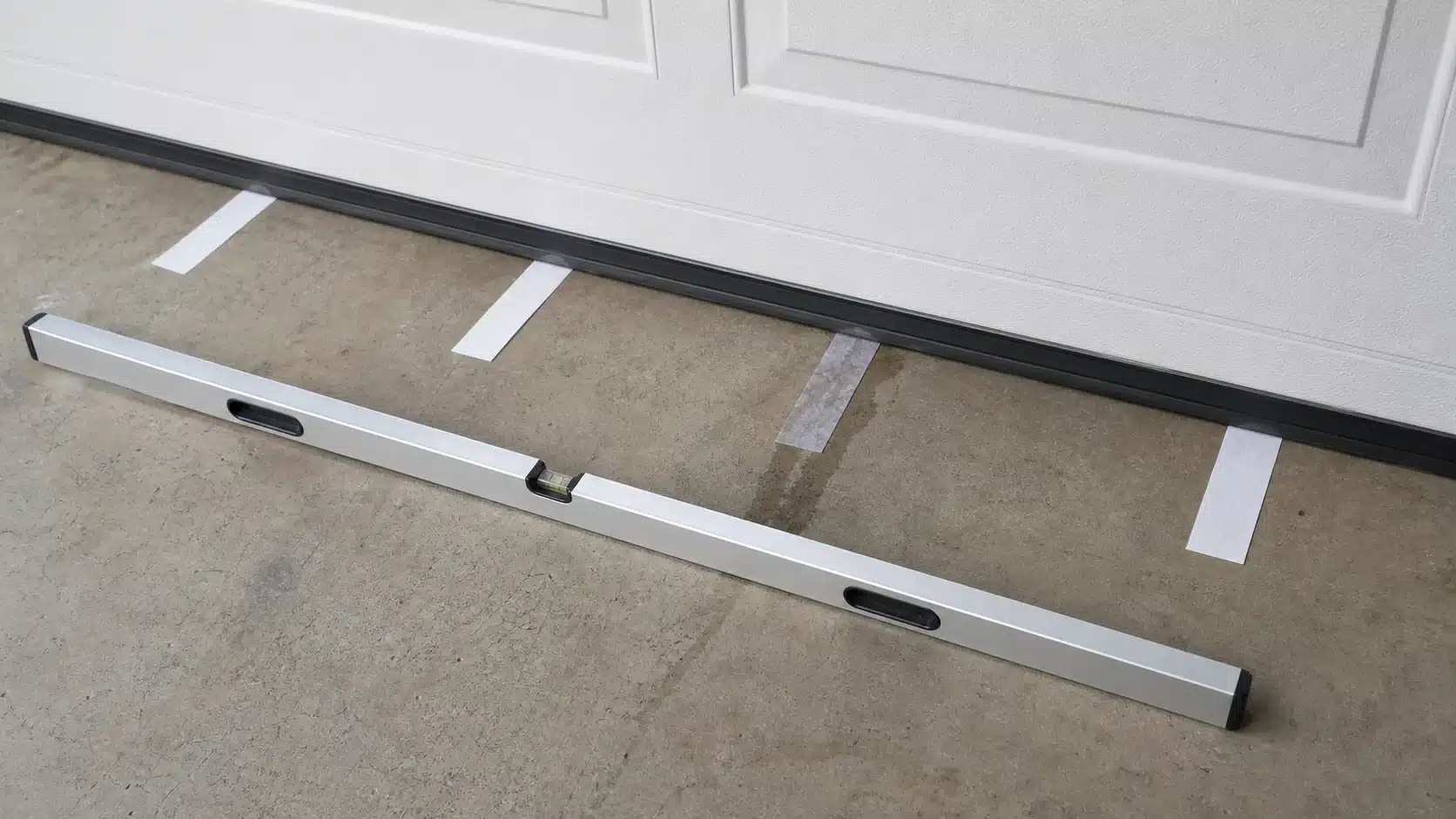
A controlled hose test is not necessary for most homes and can create a misleading result if water is sprayed upward, against the side seals, or in greater volume than natural rain. If the source remains unclear, observation during ordinary light rain is safer and more representative than deliberately flooding the opening.
What the water pattern usually means
| What you observe | Most likely category | Check next | Do not assume |
|---|---|---|---|
| Single narrow trail | Seal damage or a local slab dip | Bottom-seal condition, debris, contact and slab profile at that exact point | That the entire door needs a thicker seal |
| Tapered daylight or one low corner | Door position, damage or uneven floor | Whether the door sits level and moves freely; compare the floor with a straightedge | That opener force should be increased |
| Water across much of the opening | Surface runoff or insufficient drainage | Driveway/apron slope, ponding, drain capacity, gutters and downspouts | That a flexible seal should act as a flood barrier |
| Corner wet only during windy rain | Perimeter entry or concentrated exterior runoff | Side weatherstrip, jamb, nearby downspout and exterior wall path | That the bottom seal is the entry point |
| Wet wall edge or slab crack | Building-envelope, drainage or concrete issue | Exterior grade, wall penetrations, foundation/slab condition and water source | That sealing the door will stop it |
| Moisture without rain | Interior source | Vehicle snowmelt, condensation, plumbing, appliances and stored liquids | That exterior rain is involved |
If the concrete darkens or feels damp without a visible trail from the opening, treat that as a different problem. Our garage-floor moisture testing guide explains how to separate an active leak from moisture moving through the slab before applying epoxy or sealer.
How to stop water coming under a garage door
Match the fix to the first wet point and the exterior water path. A door seal closes a gap; drainage keeps runoff from reaching that gap in the first place.
Replace the bottom seal when it has failed
A bottom weatherseal is attached to the moving door and compresses against the floor. Clopay recommends replacement when the weatherseal is cracked or visibly worn. It also makes sense when the profile is torn, brittle, permanently flattened, missing, or no longer contacts the slab even though the door itself sits correctly.
Match the existing retainer and seal profile. Products described as universal do not necessarily fit every door. Our bottom-seal buying guide by retainer type shows what to measure and compares double-T, bead-end, P-bulb, and retrofit options.
Consider a threshold for a limited contact problem
A threshold is bonded to the slab. It can provide a raised contact line when a sound door and bottom seal meet a slightly uneven floor, and some designs can redirect minor surface water.
Dry-fit it first. Confirm it will not trap water inside, interfere with the door, or conceal a larger slope or drainage failure.
Correct the door when it does not sit evenly
A tapered gap, one low corner, damaged section, binding, repeated reversal, or a door that will not remain in place can be a door-system problem rather than a weatherseal problem.
Do not increase closing force to crush a thicker seal. Use a technician when the correction involves tracks, cables, springs, brackets, balance, or damaged sections.
Manage water outside when runoff reaches the opening
If water ponds across the apron or flows toward the garage, investigate grading, concrete settlement, gutters, downspouts, channel drains and the route runoff takes across the property.
DASMA’s guidance for water entering under a sectional door treats the slab or sill detail as part of the solution. A threshold may reduce minor entry, but it should not be used to promise flood protection or compensate for a drain that cannot carry the arriving water.
A practical order of operations
- Remove debris and document the patternClean leaves, gravel and dirt from the contact line. Photograph the dry threshold and the first wet point during the next appropriate rain.
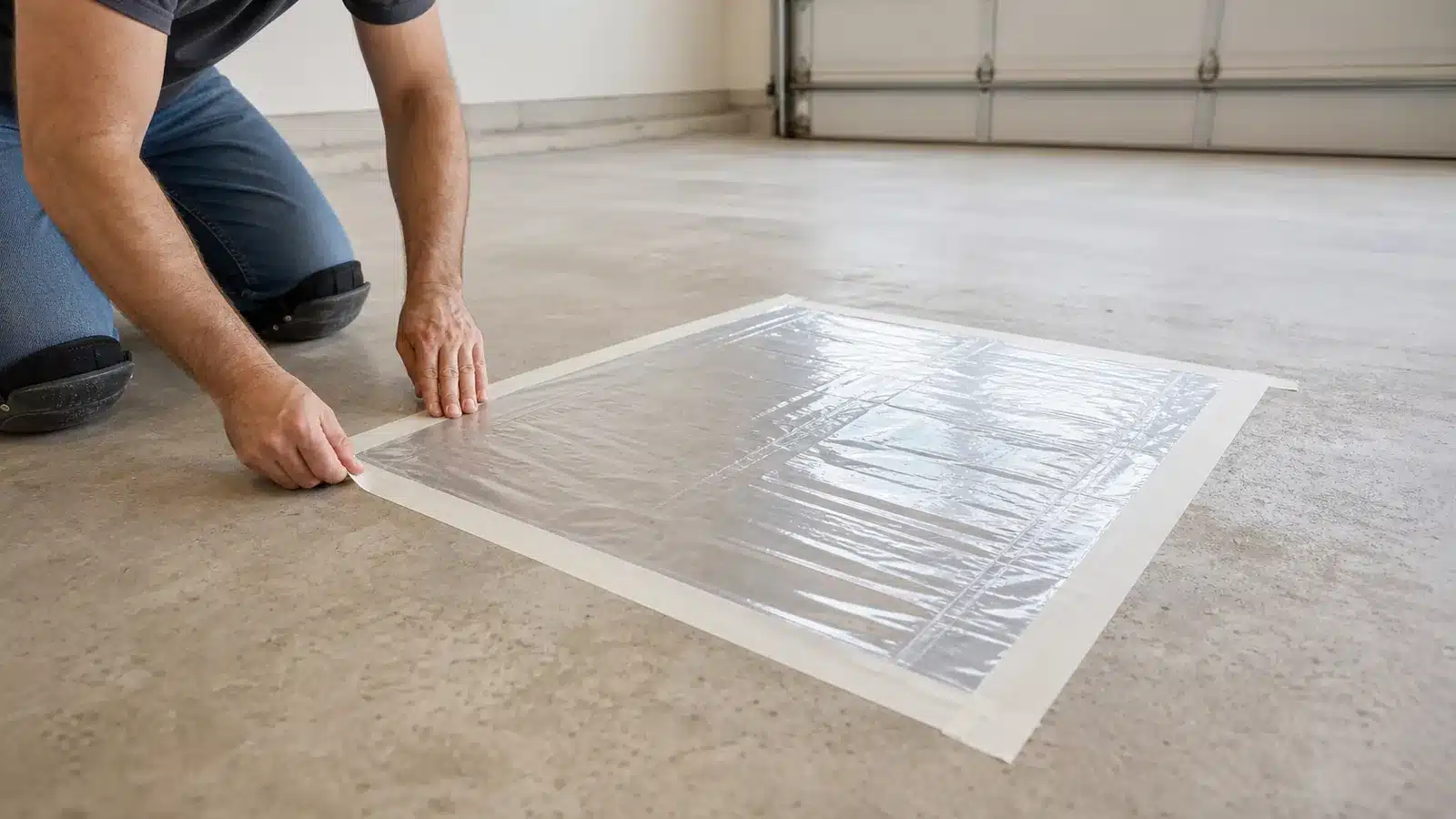
- Inspect the complete door-to-floor contactWith the door closed and controls disabled, look for damaged seal, visible light, uneven contact, a local slab depression or a crooked door. Keep fingers clear of joints and moving parts.
- Trace exterior runoffWatch whether water flows toward the opening, spills from a gutter, exits a downspout nearby, bypasses a clogged drain, or collects where the driveway or apron has settled.
- Match the repair to the causeUse a matched seal for a failed seal, a properly selected threshold for a limited contact problem, a garage-door technician for alignment or hardware, and a qualified drainage or concrete professional for runoff or slab issues.
- Retest during similar conditionsAfter the repair has cured or been completed, observe the opening during comparable rainfall. Confirm both that the water path changed and that the garage door completes its full travel and safety checks.
If the diagnosis points to weatherseal
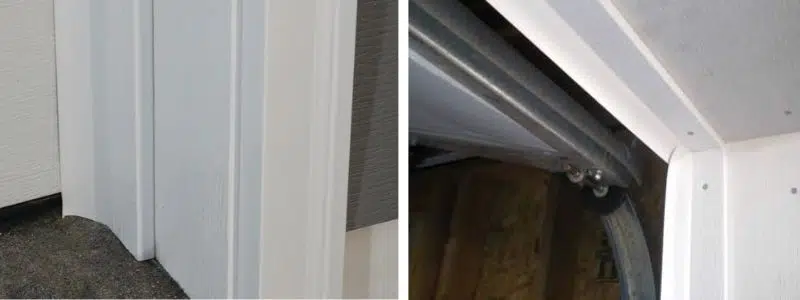
Use our garage-door gap and weatherseal guide to distinguish the moving bottom seal from perimeter stop molding and a bonded floor threshold. It shows how to identify the old seal profile, measure the retainer, and avoid buying a so-called universal seal that does not fit your door.
When a garage door threshold seal helps—and when it can make things worse
A threshold creates a raised line on the slab. That can be useful only when water has a safe place to go. If water already enters through a wall, slab crack or side opening, a new barrier across the vehicle opening can hold that water inside longer. It may also redirect runoff toward a wall or the opposite corner.
Do not bond a threshold over dirty, damp, deteriorated or coated concrete unless the manufacturer allows that surface and preparation. Check the adhesive, orientation, minimum temperature, cure time, and how long vehicles must stay off the threshold. Then run a complete door cycle and confirm that the closed door meets the threshold without excessive force.
What to do after water gets into the garage
Dry the space, then fix the route
For a small clean-rainwater puddle with no electrical hazard, photograph any damage, move cardboard and fabric off the floor, remove the water with a mop or squeegee, and ventilate or dehumidify the space. The EPA recommends cleaning and drying wet materials within 24 to 48 hours when possible. If the water may contain sewage, chemicals, or fuel, or if electrical equipment became wet, stop and use qualified cleanup or electrical help instead of treating it as a routine puddle.
Who should inspect a recurring garage leak?
- Garage-door technician: uneven door position, damaged sections, track problems, repeated reversal, poor balance, or work near cables, springs and bottom brackets.
- Concrete or drainage contractor: driveway slope toward the garage, a settled apron, channel-drain problems, widespread ponding or a slab low point that redirects runoff.
- Gutter or roofing professional: roof runoff overflowing near the garage, failed gutters or downspouts discharging beside the opening.
- Waterproofing or foundation professional: water beginning at a wall, foundation joint, slab crack or another route unrelated to the door contact line.
- Electrician or emergency professional: water contacting energized equipment, damaged electrical components or any situation that cannot be approached from a dry, safe location.
Garage-door water entry FAQ
Why is my garage door still leaking after I replaced the bottom seal?
The replacement may not match the retainer, may be too narrow to reach a local slab dip, or may not meet the floor evenly. Water can also enter at a side seal or be pushed under the door by wind, ponding, an inward-sloping driveway, or an overwhelmed drain. Recheck the first wet point instead of adding more closing force.
Why does water enter at only one corner?
Common possibilities include a torn seal, a local slab dip, a door that does not sit evenly, wind-driven rain at the side weatherstrip or runoff concentrated at that corner. Mark the first wet point and inspect both the interior contact line and exterior water path.
Does a garage-door threshold work on a sloped driveway?
It may help with limited surface water only when the exact product suits the opening and water can still drain safely away. A threshold should not be treated as a substitute for correcting a driveway or apron that delivers significant runoff toward the building.
Can I make the opener push the door down harder?
Do not use added closing force to hide a gap or crush a thicker seal. Excessive force can interfere with safe operation without correcting a crooked door, floor depression, damaged seal or drainage problem. Follow the opener and door instructions and use a technician for alignment or balance concerns.
When is a trench or channel drain more appropriate?
A drain may be the appropriate category when surface water flows across the driveway or ponds along much of the opening. Its placement, outlet and capacity depend on the site and local requirements, so repeated or substantial runoff deserves a drainage assessment rather than a guessed door-seal fix.
What if the garage is wet when it has not rained?
Look for vehicle snowmelt, condensation, plumbing or appliance leaks, wall or slab moisture and spilled liquids. The final puddle location does not prove the water entered beneath the garage door. If the slab itself is the suspected source, use the garage-floor moisture tests appropriate to your next project.
Sources and further reading
- Clopay: bottom weatherseal inspection and replacement indicators
- DASMA TDS 197: water infiltration under a sectional door
- DASMA TDS 1503: wind-driven rain and realistic water-resistance expectations
- DASMA: high-tension garage-door component safety
- Ready.gov: electrical and personal safety during flooding
- EPA: flood cleanup and drying guidance
- University of Minnesota Extension: grading, gutters, downspouts, and surface drainage